
For tuning shops, race teams and performance builders: how a rebuilt turbo must be balanced, how to set up the oil feed for ball bearing and journal bearing cores, what the G-Series GEN II impeller changes over the original, and the install discipline that keeps high-boost builds alive. Build questions? Email [email protected].
Component balancing alone is not enough. Once the rotating assembly is assembled into the CHRA, the stack-up of small errors must be corrected at speed — a VSR (Very High Speed) balance is the difference between a rebuild that lasts and one that eats its bearings.
| Component Balancing | VSR Balancing | |
|---|---|---|
| What is balanced | Compressor wheel and turbine wheel individually | The complete CHRA, fully assembled |
| Machine | Low-speed balancing machine | High-speed balancing at 100,000–250,000 rpm |
| What you see | Visible grinding marks on the two balance planes | Fine correction, tighter balance limits |
| What it catches | Imbalance of the individual wheels | Assembly errors, bent parts, bad components — the real running condition |
Component balancing pre-balances the compressor wheel and turbine wheel on a low-speed machine. The grinding marks on the two balance planes show where material was removed. It is a necessary first step — and nothing more.
VSR balancing spins the assembled CHRA at 100,000–250,000 rpm and corrects the imbalance of the whole rotating assembly at its true operating speed, to a much tighter limit.
Every CHRA and complete turbo we ship is VSR-balanced as standard. If your rebuild shop does not have VSR capacity, budget for it — it costs less than the bearing set it saves.
Ball bearing and journal bearing cores need different oil feed setups — using the wrong one will damage the turbo. A ball bearing cartridge needs restricted pressure; a journal bearing needs volume at full pressure. Set it once, correctly:
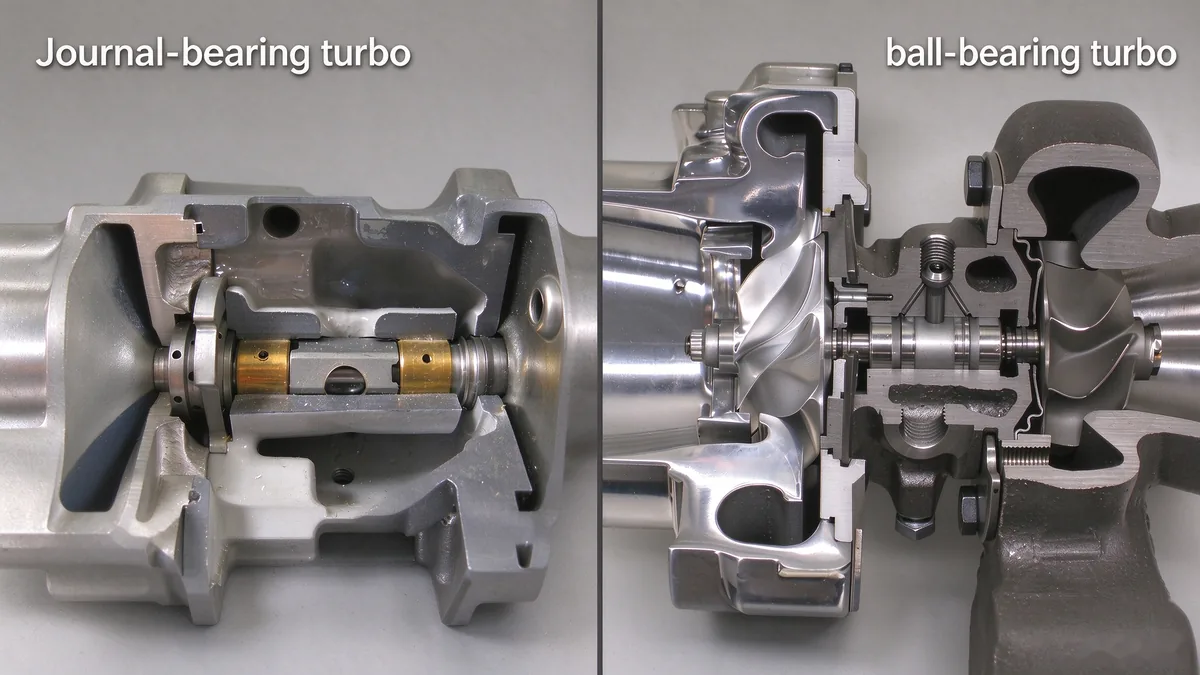
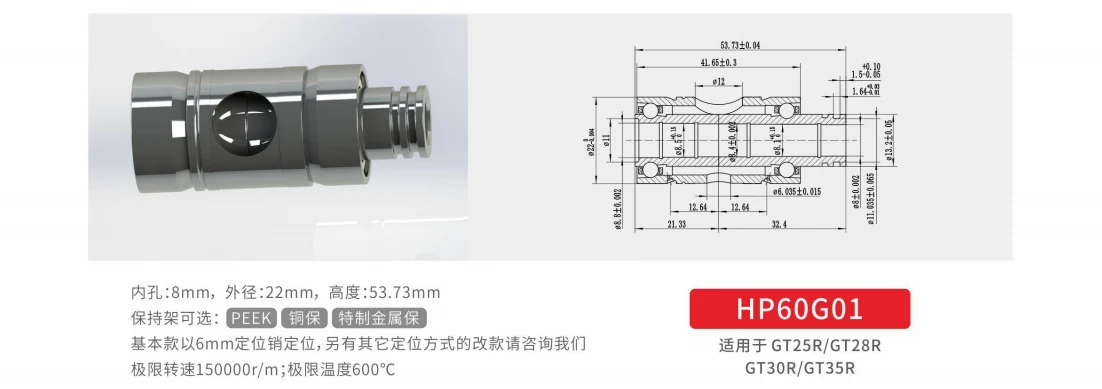
Feeding a ball bearing turbo un-restricted washes out the cartridge; restricting a journal bearing starves it. Before you plumb a build, identify the core — and if you are unsure which one you have, send us the part number.
Not every “G-series wheel” is the same. The GEN II billet compressor wheel is a clean-sheet redesign, not a copy — and the differences are visible the moment you put the two wheels side by side:
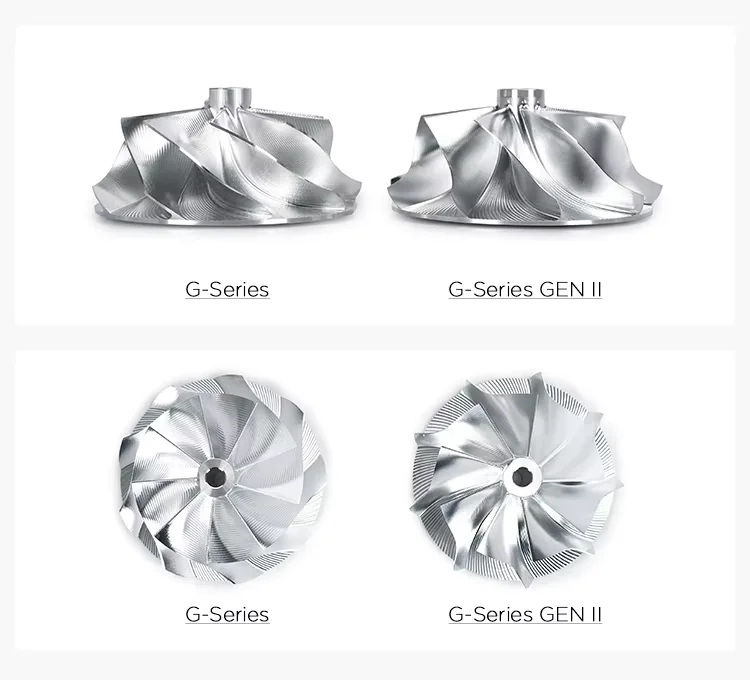
The result: these design changes deliver up to 10% higher compressor flow and increased efficiency at high flow rates — more top-end without giving up mid-range response. When you order, make sure your upgrade wheel is the GEN II geometry if your build targets maximum flow.
Performance builds fail for the same reasons stock replacements do — oil — plus one more: impatience. The checklist is short and non-negotiable:
Six checks, two minutes each. Every blown first-start we have seen traced back to a skipped one of these — usually pre-lube or an unrestricted ball bearing feed.
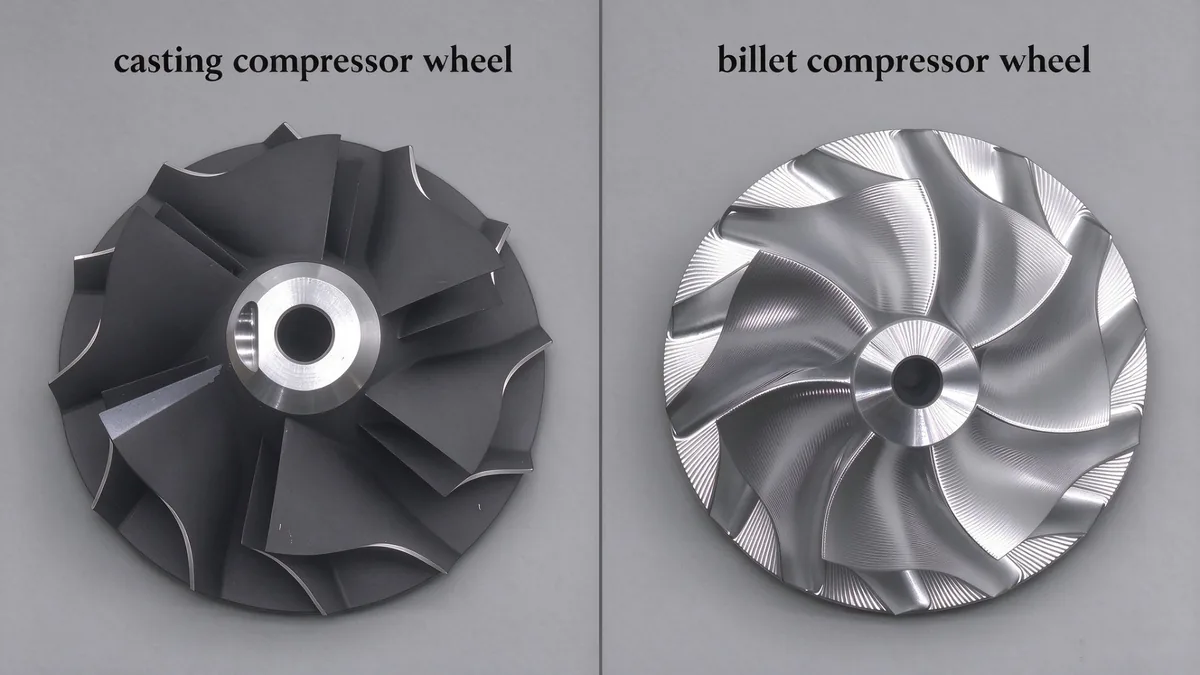
A billet compressor wheel is machined from a single solid aluminum billet on a CNC machine instead of being cast. It is stronger, allows thinner blades and extended-tip designs, and holds tighter tolerances at high boost. For high-boost performance builds, billet is the default choice; for stock replacement, cast is entirely sufficient.
Turbo lag is the time between throttle input and boost delivery, driven by exhaust gas volume at low rpm, turbine housing A/R, rotating mass (wheel size and material) and exhaust system design. Smaller A/R housings and lighter, ball-bearing rotating groups cut it; exhaust restrictions multiply it.
Yes — a VSR balance of the assembled CHRA is mandatory after every rebuild. Component balancing the two wheels is not enough: assembly errors accumulate on the thrust collar and locknut, and only a high-speed balance of the complete assembly catches them. Skipping it is the most common cause of premature bearing failure in rebuilt turbos.
Target 40–45 psi at maximum engine speed, delivered through a restrictor or pressure regulator (0.040″ jet as a baseline) and a -3AN or -4AN line. More pressure does not help a ball bearing cartridge — it overwhelms the seal system and floods the bearing.
Journal bearing turbos spin on a pressurized oil film — simple, robust, tolerant of full-pressure feed, slightly more lag. Ball bearing turbos carry the shaft on a cartridge of ball bearings — faster spool, lower oil flow, but they require a restricted oil feed and a cleaner system. Choose by spool response and budget; choose the oil setup by which one you bought.
Related: Replacement Turbocharger · Performance Turbo Catalogue · Warranty · Policies