
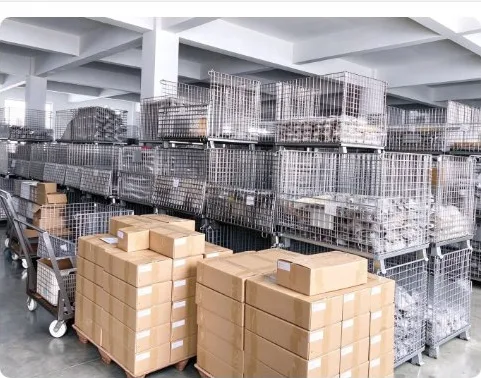
Bulk turbocharger supply with three things a workshop or distributor actually needs: high-volume availability you can restock against, OE cross-reference so the number on the old turbo is matched before it is quoted, and stable lead times you can promise a customer. Below that: how to install a replacement so it survives, and how to read a failure when one comes back. Send a part number and quantity to [email protected] — detailed quotation within 24 hours.
Every order is checked against the OE number before it leaves the building. That single rule is what keeps a bulk programme from turning into a return pile — and it is the reason our wholesale customers reorder at a rate above 90%.

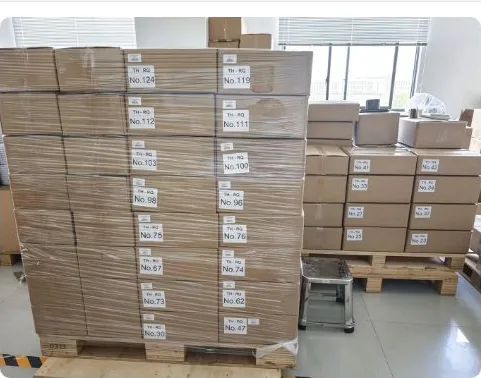
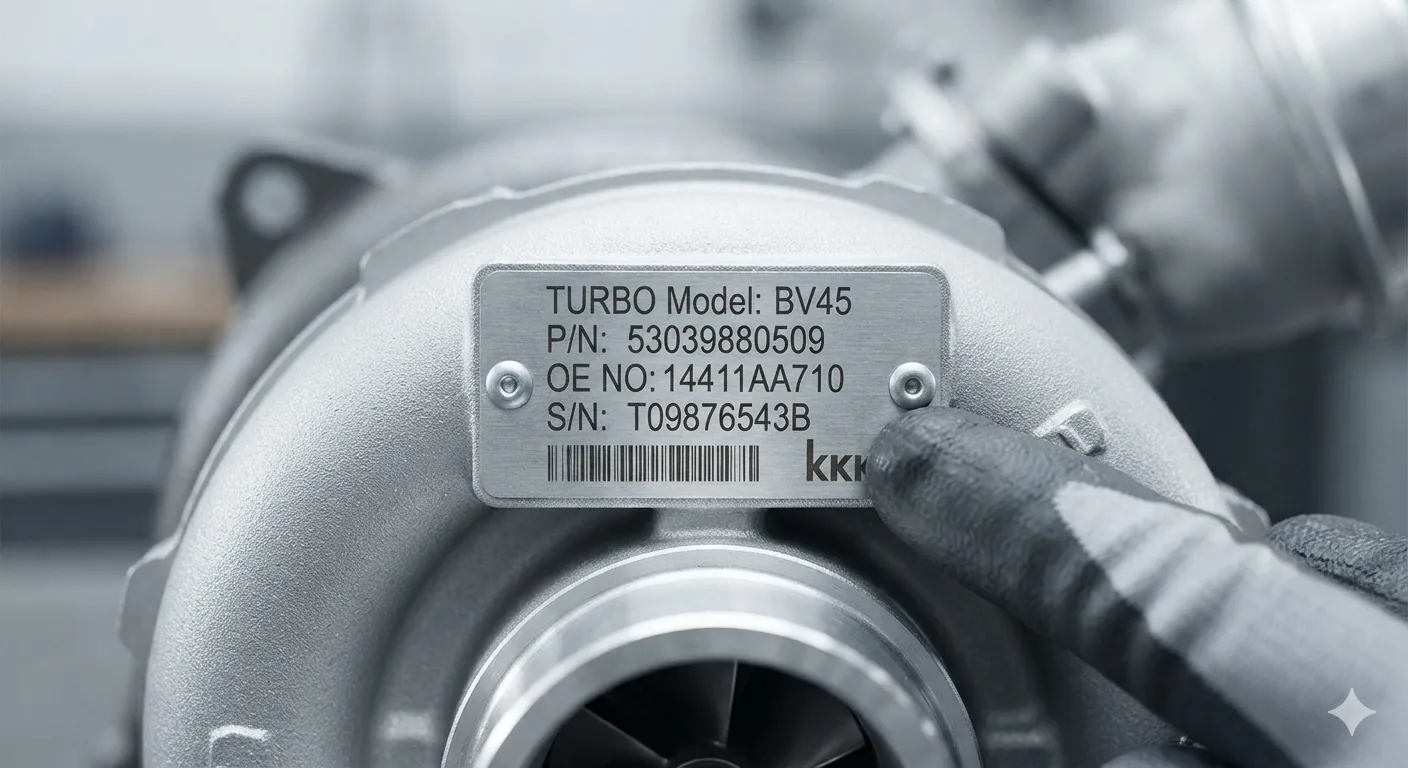
A replacement turbo carries several numbers at once: the OEM part number, the aftermarket brand reference, and the cast or laser-etched number on the housing itself. The mismatch between those systems is where wrong-fitment returns come from. We cross-reference all six systems we handle every day, and our OE cross-matching programme adds new references continuously.
Take one Volvo 2.0D D3/D4 turbo, part number 795680. The same unit is listed in the aftermarket under fourteen different numbers — and any one of them can be sent to us and resolved to the same turbocharger:
| Numbering System | Accepted References (sample) | What it resolves to |
|---|---|---|
| OEM / OE numbers | 36001168, 86001168, 31312713, 795680-0003 | One complete turbocharger for Volvo S60 II / S80 II / V60 I / V70 III / XC60 / XC70 II — D5204T2 / T3 / T7, 1984cc D3 / D4 Diesel |
| Garrett references | GTC1444VZ, 795680-5001S, 795680-5003S | |
| Aftermarket brand numbers | 795680-5001RS (BR Turbo), IT-795680 (Inter-Turbo), 1000-010-589 (Jrone), STC72063.7 (Sando), 172-06270 (Schlüitter) |
Our own part number 795680 carries 14 accepted references in total. A Mazda 2.2D twin-turbo, part number 810358&810357, carries 82. If your number is not among them, send it with a photo of the nameplate — we will confirm it or tell you plainly that it is not in the catalogue.
Restocking a workshop means committing to a delivery date. The table below is the commitment we work to, quoted from our catalogue rather than from a marketing page.
| Order type | Lead time | Notes |
|---|---|---|
| In-stock references | 3–7 days | Dispatched within 48 hours after payment is verified. No weekend dispatch. |
| Made to order (standard build) | 15–25 days | Built against your order at the partner plant, with batch traceability from casting. |
| Made to order (OEM-spec complete turbo) | 30 days | Includes 100% oil-fed run test and air-leak test before packing. |
| Distributor programme (forecast-based) | 15–30 days average | Capacity reserved and buffer stock held for your fast-moving references. |
| Sample order (1 piece) | As above | Most references have a 1-piece or 1 pc sample / 5 pcs wholesale MOQ. |
| Standard volume MOQ | 5–10 pieces per reference | Framework MOQ per reference with mixed-carton loading on distributor programmes. |
Reference-level MOQ and lead time are stated on every catalogue entry — see the turbocharger catalogue for the figure that applies to your specific number.
| Item | Terms |
|---|---|
| Delivery terms | FOB · EXW · DDP · DAP |
| Payment | T/T · L/C · Western Union |
| Nearest ports | Shanghai Port · Ningbo Port |
| Dispatch | Within 48 hours of payment verification; UPS, DHL, FedEx or forwarder |
| Returns | 30 days from purchase, unused and in original packaging |
| Warranty | 12 months against manufacturing and material defects |
| Quotation turnaround | Within 24 hours of receiving part number, quantity and destination |
Full terms are set out on the Policies and Warranty pages. Distributor and partnership terms are on European Partners.
Most returns and repeat failures start with a wrong or half-matched part number. Four steps take five minutes and remove almost all of that risk:
Read the number stamped or laser-etched on the compressor housing, turbine housing or nameplate — for example a Garrett 758219-0001 or a Holset HX35W casting number. If the plate is unreadable, photograph the housings from two or three angles.
Email the OE number with photos of the nameplate and the complete unit to [email protected]. Photos let us check housing variants and actuator types that a number alone cannot show.
We check your number against Garrett, Holset, Melett, MHI, IHI and BorgWarner catalogues, plus our own order history. One engine often has two or three turbo builds — the cross-reference tells us which one you actually have.
You receive a confirmed replacement part number, the build type (complete turbo, CHRA cartridge or repair kit) and lead time in writing. Only then is the order placed — no guessing, no "close enough".
OEM Cross-Reference. We match numbers across the six systems we handle every day: Garrett (GT/GTX/G-series), Holset (HX/HY/HE), Melett (aftermarket CHRA and repair-kit references), MHI, IHI and BorgWarner (KP/S2/S3, EFR). If your number sits between two systems, we confirm the engine application before we quote.
Most "failed" turbochargers are killed by something outside the turbo. These are the four causes that account for almost every warranty return we see, and the six points that prevent them.
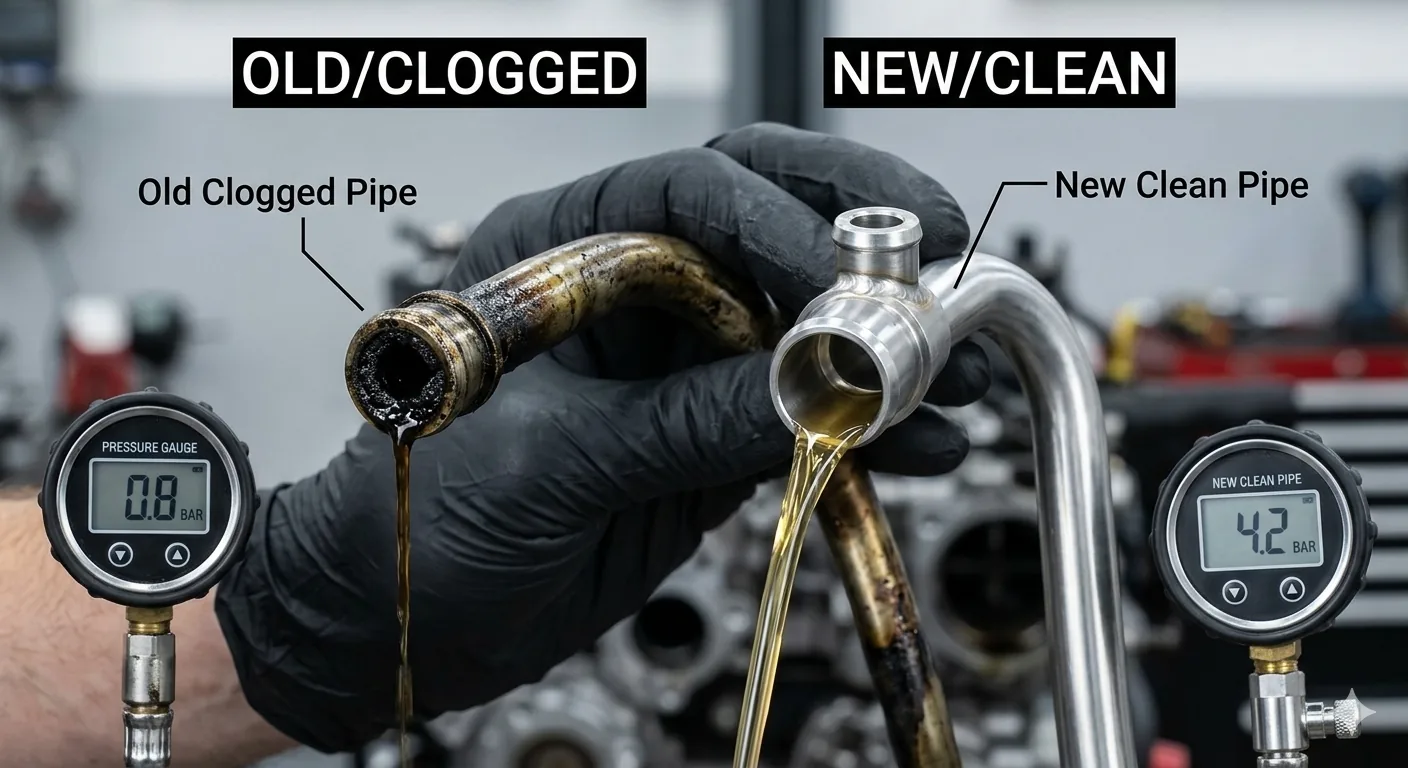
Cause: a coked or restricted oil feed line starves the bearing in seconds.
Fix: always fit a new oil feed line with a new turbo — never reuse the old one, however clean it looks inside.
Cause: metal particles and carbon from a worn engine.
Fix: clean or replace oil cooler and lines. Use correct oil and filter.
Cause: debris through a leaking intake.
Fix: inspect intake hoses and air filter. Keep openings covered during install.
Cause: shutting off a hot engine cokes the oil.
Fix: idle 2–3 minutes after heavy load.
Reading the failed turbo correctly tells you what to replace alongside it. Oil leakage is the most common signature — and the side it appears on tells its own story.
Oil found at the compressor end usually traces back to:
Oil at the turbine end is more serious — it usually means the seal or the rotating assembly itself is past its life:
Our improvement: both the compressor end and the turbine end of our turbochargers use a dual seal ring design. Two seal rings per end double the sealing path, so oil stays in the bearing housing even when the drain is briefly restricted — a direct answer to the leakage patterns above.
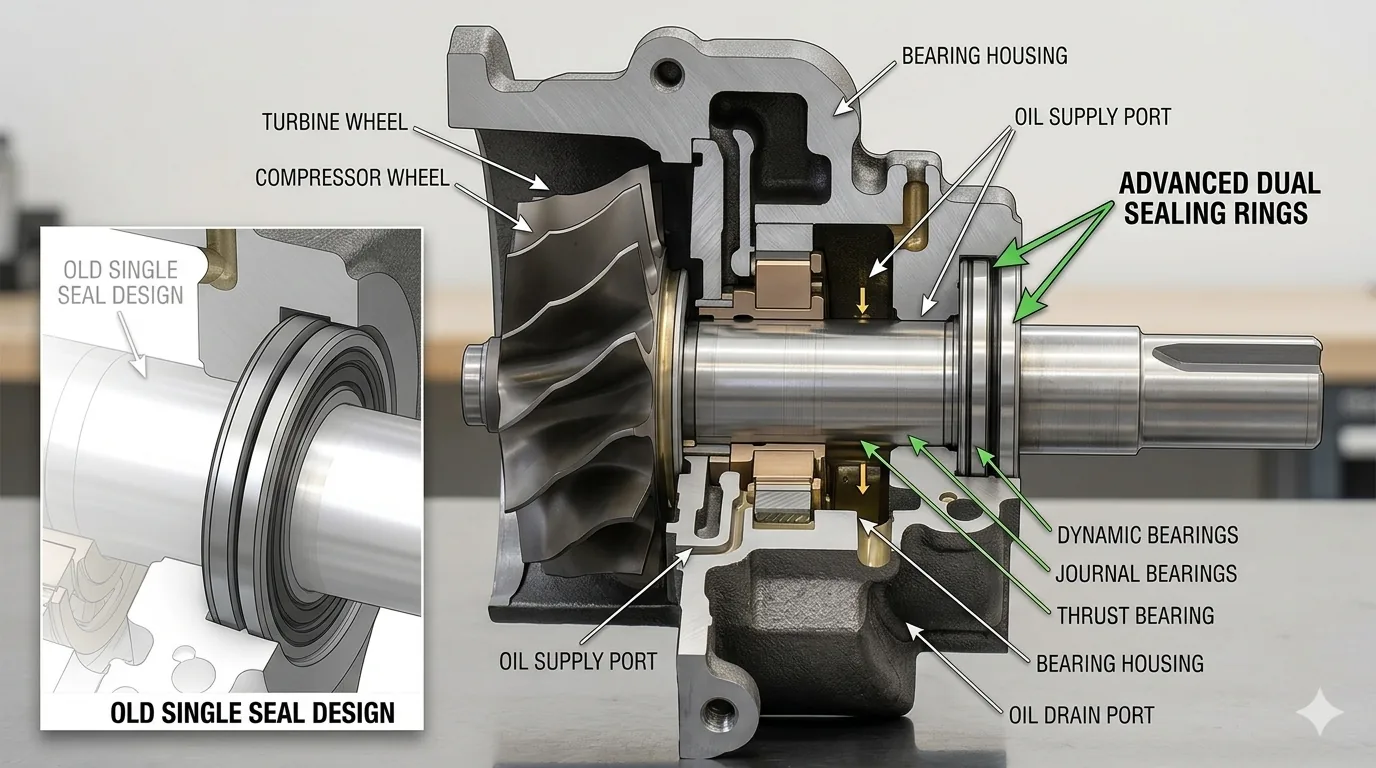
A turbocharger spins at up to 240,000 rpm with exhaust temperatures up to 950°C. At those speeds it floats entirely on its oil film: 5 seconds of oil starvation does as much damage to a turbo as 5 minutes without oil does to an engine.
Where the contamination comes from:
Prevention: when you replace the turbo, replace the oil and filter with it; check the oil specification against the engine maker's standard; clean or replace the oil supply line.
Symptoms first, causes second, action last — in that order. Match the symptom your customer reports to the row, and check the cheapest cause before condemning the turbo.
| Symptom | Possible Cause | Action |
|---|---|---|
| Engine misfire | Faulty turbo or CHRA | Check part number, replace |
| Rough idle | Control valve sticking | Clean or replace |
| Hard start | Stuck VNT vanes or sluggish actuator | Check actuator movement and linkage |
| White smoke | Seal or bearing issue | Replace CHRA |
| No start | Actuator or solenoid failure | Check actuator |
| Low power | Low boost pressure | Check turbine and compressor |
| Black smoke | Over-fueling | Check fuel system |
If the turbo is replaced, always resolve the cause as well — oil supply, intake integrity, drain line — or the replacement follows the old one to the same end.
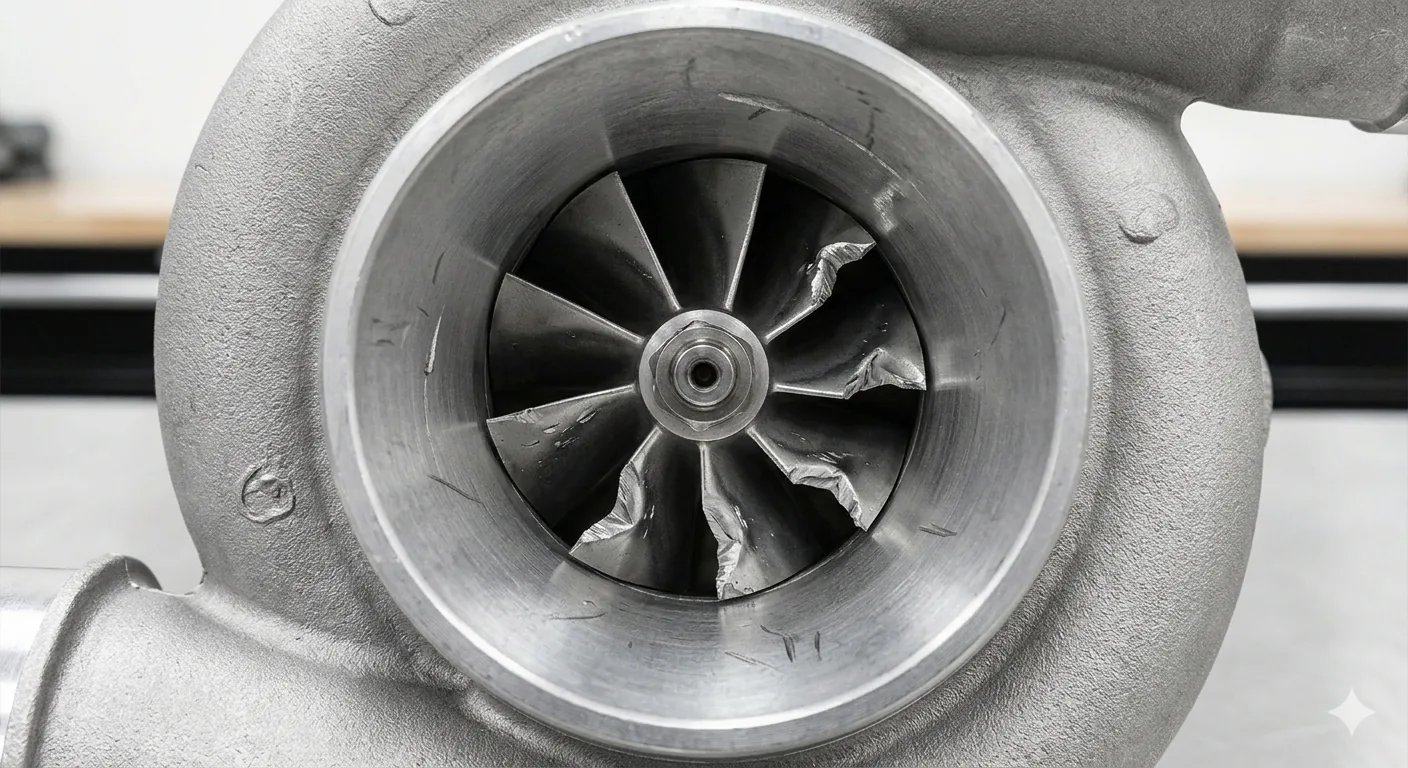
Blade damage like this is terminal for the wheel. It also confirms the failure came from outside the turbo — inspect the intake path before the new unit goes on.
A CHRA (centre housing rotating assembly) is the cartridge only — bearing housing, shaft, wheels and bearings. A complete turbocharger adds the compressor and turbine housings, the actuator and all fittings. Replacing the CHRA reuses your existing housings and is the cheaper route when the castings are sound; a complete turbo is the faster route when housings are cracked, corroded or the actuator is suspect.
A journal bearing runs on a hydrodynamic oil film and is durable and cheap to rebuild. A dual ball bearing cartridge uses two angular-contact ball bearings, spools noticeably faster with less friction, and needs a restricted oil feed. OE diesel turbos are almost always journal bearing; performance upgrades are usually ball bearing.
Work from the OE number on the old unit, not from the engine model. Read the number off the nameplate or housings, send it to us with photos, and we cross-reference it against Garrett, Holset, Melett, MHI, IHI and BorgWarner before quoting. One engine often has two or three turbo builds.
In order of frequency: oil starvation (blocked or coked feed line), oil contamination (particles and carbon from a tired engine), foreign object damage through the intake, and coking from shutting down a hot engine. The turbo is usually the victim, not the cause — fix the oil supply and intake path with the replacement.
Keep the intake sealed and the air filter clean, keep the oil drain line straight and unrestricted, do not overfill the crankcase, and keep crankcase ventilation working. Our turbochargers use a dual seal ring design at both ends, which doubles the sealing path and tolerates brief drain restriction far better than a single ring.
Most references have a 1-piece MOQ for a sample order, or 1 pc sample / 5 pcs wholesale. Standard volume MOQ on replacement turbos is 5–10 pieces per reference. On distributor programmes we work to framework MOQs per reference and support mixed-carton loading, so you can consolidate multiple references into one shipment instead of buying full cartons of each.
In-stock references ship in 3–7 days and are dispatched within 48 hours of payment verification. Made-to-order references take 15–25 days for a standard build and 30 days for an OEM-spec complete turbo. On forecast-based distributor programmes the average lead time stays at 15–30 days because we reserve capacity and hold buffer stock for your fast-moving references.
Yes. We match your number against Garrett, Holset, Melett, MHI, IHI and BorgWarner catalogues, plus our own order history, and confirm the build variant in writing before quoting. Our part number 795680 alone resolves from fourteen accepted references, and 810358&810357 from eighty-two.
Related: For Tuning & Racing · Turbocharger Catalogue · European Partners · Warranty · Policies